
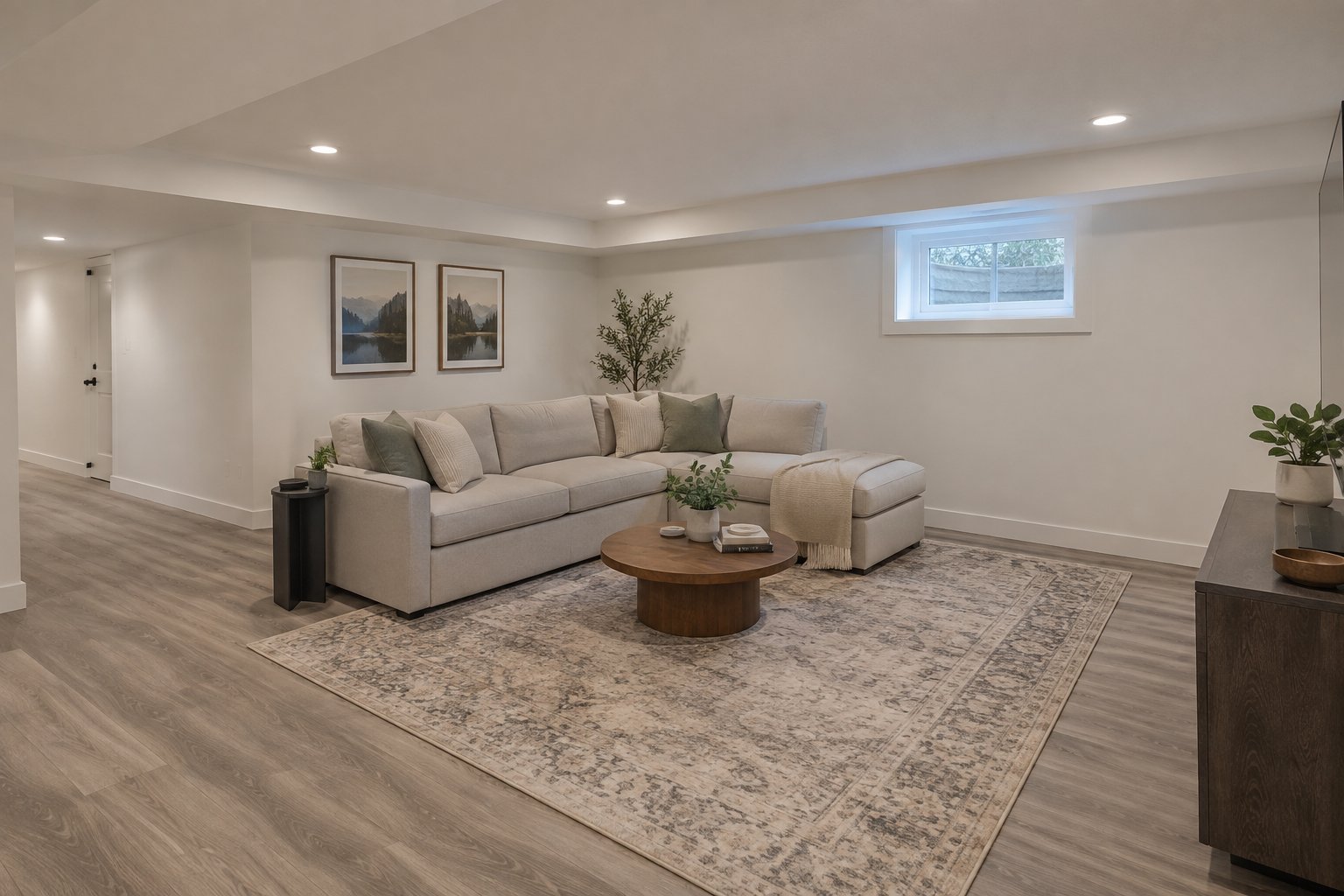
Flooring is one of the first things people pick when they plan a finished basement, and one of the most common places a basement project goes wrong. A basement floor sits on a concrete slab that is in contact with the ground. Even in a basement that never floods, that slab can stay cool and give off a little moisture year round. A floor that works fine in a living room upstairs can cup, smell, or come apart down there.
Below is how the most common basement flooring options compare, what each one needs underneath it, and where each one makes sense. None of them fix a wet basement, so if you see standing water, efflorescence, or a musty smell, read our post on reading the moisture signs before you frame a wall first.
Basement Flooring Compared
| Flooring | Handles moisture | Feel underfoot | Best for |
|---|---|---|---|
| Luxury vinyl plank (rigid core) | Very well. The plank itself is waterproof, and it can usually be pulled up and reused after a minor leak | Warmer than tile, firmer than carpet; better with a vapor barrier underlayment | Most family rooms, rec rooms, and rental basements |
| Porcelain tile | Excellent. Water does not hurt it | Hard and cold unless you add floor heating | Basement bathrooms, laundry areas, and entries from a walkout door |
| Carpet tiles | Fair. Individual squares can be pulled, dried, or replaced | Soft and warm, good for sound | Kids’ play areas, home theaters, guest rooms in dry basements |
| Wall-to-wall carpet with pad | Poor. The pad holds water and odor after any leak | Softest and warmest | Only basements with a long dry track record, and even then with a moisture-resistant pad |
| Engineered wood | Limited. Tolerates some humidity but not water | Real wood look and feel | Dry basements with a dehumidifier running and a proper subfloor system |
| Sealed or stained concrete | Good. Nothing to rot, but the slab must be dry enough for the coating to bond | Hard and cool; area rugs help | Workshops, gyms, storage, and budget-minded finishes |
| Solid hardwood or laminate with a fiberboard core | Poor. Swells and buckles with slab moisture | Fine until it moves | We generally steer people away from these below grade |
What Goes Under the Floor Matters as Much as the Floor
Most basement flooring problems we see are not the flooring itself. They come from what was or was not done to the slab first. Before any floor goes down, we check three things:
- Moisture. A simple test is to tape a square of plastic sheeting to the slab for a couple of days. If the underside is damp or the concrete darkens, the slab is passing moisture and the flooring choice and underlayment need to account for it.
- Flatness. Basement slabs are rarely flat. Rigid plank and tile both need a flat surface, so low spots get filled with a leveling compound and high spots get ground down.
- Cracks and the floor drain. Cracks get evaluated and sealed where appropriate, and the floor drain and any sump pit stay accessible after the floor goes in.

Subfloor Panels: When They Help
Raised subfloor panels, the kind with a dimpled plastic or foam backing, leave a small air gap between the slab and the finished floor. They make the floor feel warmer and give slab moisture somewhere to go. They are a good fit under carpet, carpet tile, and engineered wood. They do raise the floor a little, which matters if your ceiling height is already tight, so plan for it along with stairs, doors, and trim. Under rigid vinyl plank, a good underlayment with a built-in vapor barrier is often enough.

Mixing Floors in One Basement
Many basements end up with more than one floor, and that is usually the smart move. Tile in the bathroom and laundry, vinyl plank through the main living space, and sealed concrete in the mechanical room and workshop. Keeping the furnace, water heater, and sump area on a hard, cleanable surface makes service easier and keeps a small leak from turning into a flooring replacement.
If the basement is part of a bigger list of projects, the order matters. Our post on sequencing remodeling projects explains why flooring usually goes in near the end.

Basement Finishing Around Wayne County and Nearby
We finish basements, along with bathrooms, handyman repairs, and rental work, for homeowners in Newark, Palmyra, Sodus, Clyde, Weedsport, Fulton, Oswego, and the towns in between. If you are trying to decide what will hold up on your slab, we can take a look and talk through the options with you. You can also browse our past projects. Call or text (315) 754-9996 to set up a consultation.
Related Pages
Ready to Start Your Project?
Veteran owned & operated · Lifetime warranty on all craftsmanship
Financing Available
Check what you qualify for in 60 seconds — no impact to your credit score.
Ready to Start Your Project?
TGM Contracting & Remodeling — Veteran-owned, serving Wayne County, northern Cayuga & western Oswego County